
Hotel Outdoor Furniture Supplier: How Kingmake Equips Star-Rated Resorts Worldwide
Choosing the right hotel outdoor furniture supplier is one of the most overlooked decisions in a resort's design process, yet it directly affects guest comfort, maintenance cost, and how long a property looks new. Kingmake has spent over 18 years supplying outdoor furniture to hospitality projects, from poolside decks to beachfront terraces. This article walks through what a star hotel actually needs from its furniture partner, using a real resort project furnished entirely with Kingmake collections.
Most hotels only think about furniture once the architecture and interior design are locked in, but that's usually too late. Furniture lead time, sample approval, and container shipping all need to be planned alongside the rest of the opening timeline — not after it. This guide also covers the practical side of sourcing: how materials perform in different climates, how customization works, and what questions to ask before signing a contract.
Why Star Hotels Need a Specialized Outdoor Furniture Supplier
Hotel outdoor spaces face a different set of demands than residential gardens. A pool deck might see hundreds of guests a day, salt air, direct sun for 10+ hours, and constant cleaning with commercial-grade products. Furniture that works fine in a backyard often fades, rusts, or breaks down within a single season under these conditions.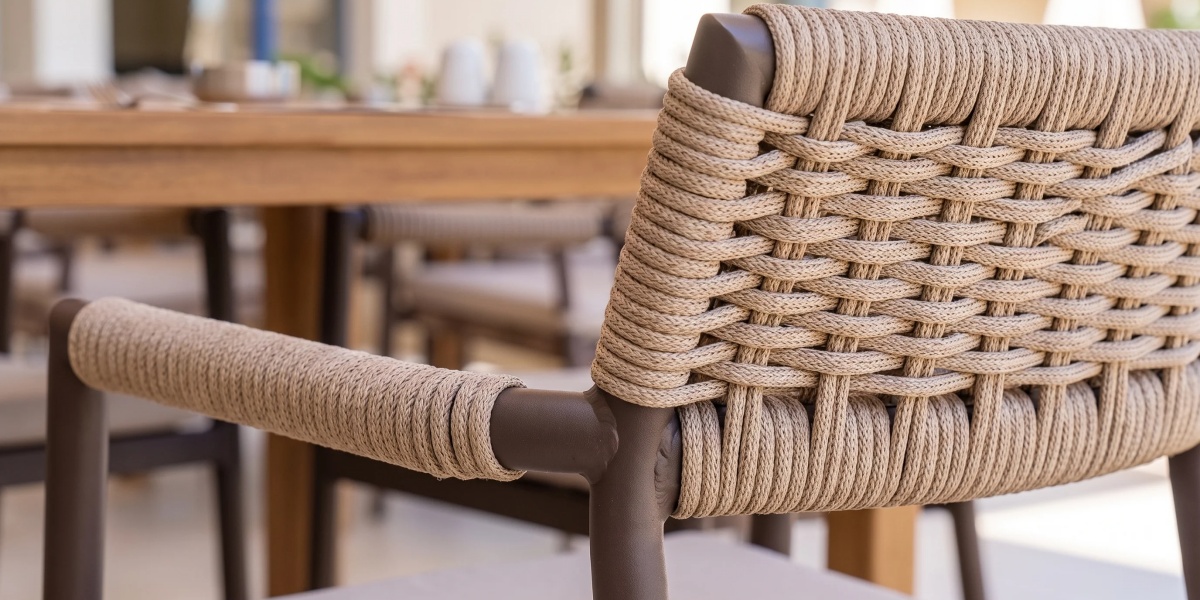
A specialized hospitality furniture manufacturer understands three things a general supplier usually doesn't:
Volume consistency — matching color, weave, and frame tolerance across hundreds of units for a single project
Weather-grade materials — powder-coated aluminum, marine-grade rope, and treated teak that resist UV, salt, and moisture
Project logistics — container planning, OEM/ODM customization, and delivery timelines that align with a hotel's opening date
What Different Climates Demand From Hotel Furniture
Not every coastal hotel faces the same conditions, and this is something buyers often underestimate until furniture starts failing early. A resort in the Middle East deals with intense heat and dust more than salt spray, so light-colored powder coating and heat-resistant fabric matter most there. A property in the Caribbean or Southeast Asia sees near-constant humidity plus salt air, which is where marine-grade rope and rust-proof aluminum frames earn their cost. Mediterranean hotels usually combine strong UV exposure with dry heat, so fade-resistant fabric and finish become the priority. Knowing which stress factor matters most in your location helps narrow down material choices before you even start comparing suppliers.
Inside a Resort Furnished by Kingmake
The images below are from a coastal resort project furnished with Kingmake's hospitality collections, covering the pool deck, beachfront terrace, restaurant seating, and indoor spa pool area.
Poolside & Rooftop Infinity Pool
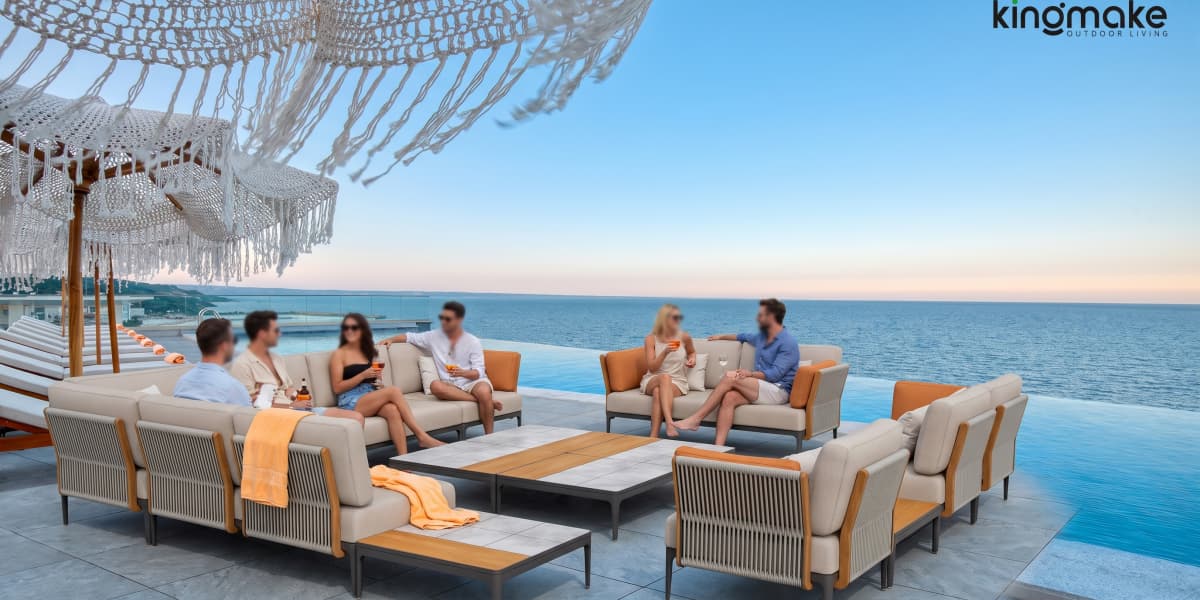
The rooftop infinity pool and main pool deck use Kingmake's sun lounger and patio umbrella sets. Two umbrella canopy styles were selected for different zones: a classic fabric canopy for the main pool area, and a hand-woven rope-fringe canopy for the rooftop lounge, giving the space a more boutique, resort-style look without sacrificing UV protection.
The two canopy styles weren't just a design choice — they solve different practical problems. The classic fabric canopy at the main pool covers a wider footprint and is easier to clean after high foot traffic, which matters for a family-facing pool deck. The rope-fringe canopy on the rooftop, on the other hand, suits a smaller, more curated lounge area where guests spend longer stretches relaxing rather than passing through. This kind of zone-by-zone thinking is usually what separates a furniture plan that looks good on day one from one that still looks good a year later.
 Restaurant Terrace Dining
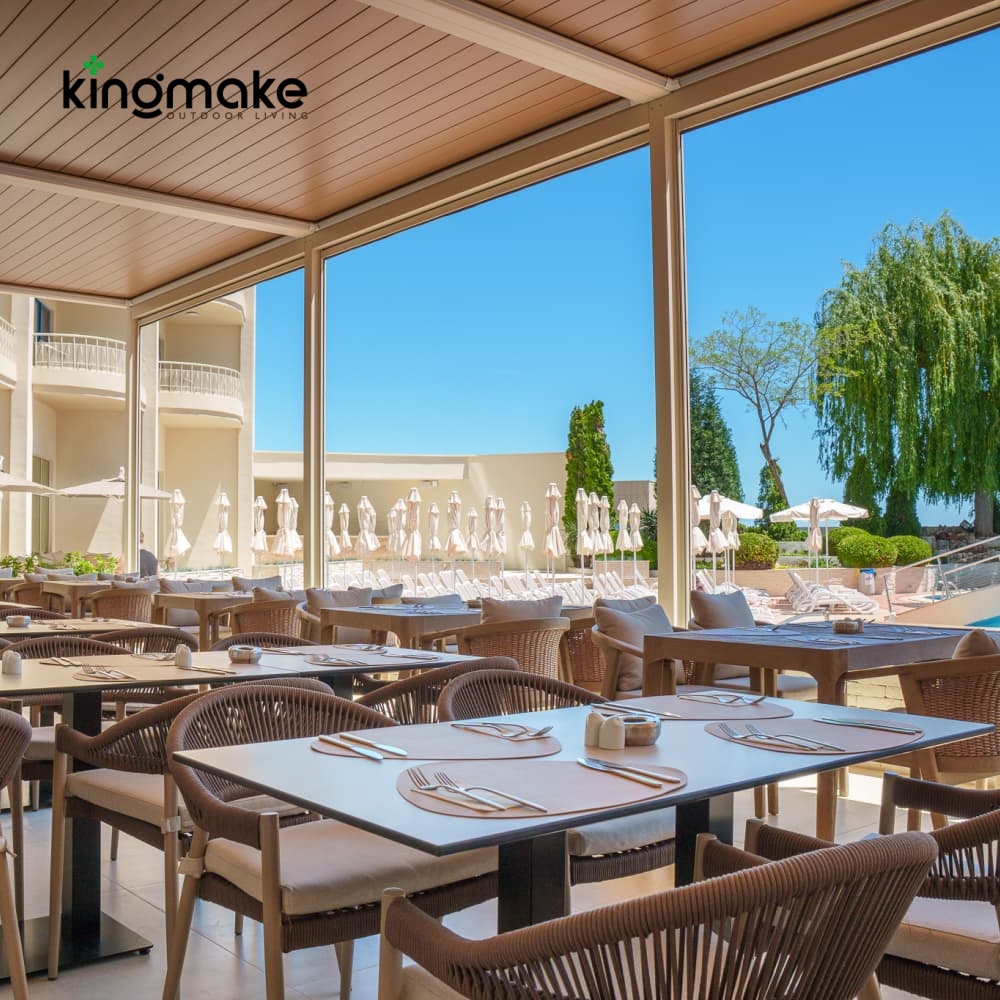
The open-air restaurant terrace overlooking the pool is furnished with a teak rattan wicker dining set — round-back woven chairs paired with teak-top tables. The natural tone works well against the terracotta flooring and keeps the space feeling warm rather than clinical, which matters for a breakfast and dinner service area.
Restaurant terraces get wiped down multiple times a day, so the woven chairs needed a finish that could handle frequent contact with cleaning cloths and spilled food or drinks without staining or fraying. Synthetic rattan weave was chosen here specifically because it holds its shape and color better than natural rattan under that kind of daily wear, while still giving guests the same relaxed, resort feel.
Beachfront & Rooftop Lounge Seating
Along the beachfront terrace, guests relax on striped cushion teak sun loungers, arranged in long rows facing the sea. Teak was chosen here specifically because it holds up to direct sun and salt spray better than most alternatives, and it ages into a silver-grey patina rather than degrading.
This patina effect is worth explaining to hotel owners who haven't worked with teak before, because it's often mistaken for wear rather than a natural, expected process. Untreated teak left outdoors will gradually shift from golden brown to a soft silver-grey over one to two years. Many resorts actually prefer this look and skip annual oiling altogether, while others request oiling twice a year to keep the original tone. Either approach is fine — it's a maintenance preference, not a durability issue.
Indoor pool areas actually trap more moisture than an open-air terrace because there's no wind or direct sun to dry surfaces between uses. Frame materials that would be perfectly fine outdoors can sometimes develop condensation-related issues indoors if the wrong finish is used. This is a detail that's easy to miss when a hotel buys furniture as one single order instead of specifying it zone by zone.
Indoor Spa Pool Lounge
For the indoor spa and hydrotherapy pool, Kingmake supplied teak loungers with cushioned pads suited to a humid, indoor environment — a reminder that hotel furniture sourcing isn't only about outdoor durability, but also matching material to the specific microclimate of each space.
Kingmake's Core Hospitality Furniture Collections
Below is a quick comparison of the five product lines most commonly specified for star hotel projects.
| Product | Best For | Key Material | Maintenance |
|---|---|---|---|
| Modern Aluminum Rope Woven Dining Set | Restaurant terraces, rooftop dining | Powder-coated aluminum frame, woven rope | Low — wipe clean |
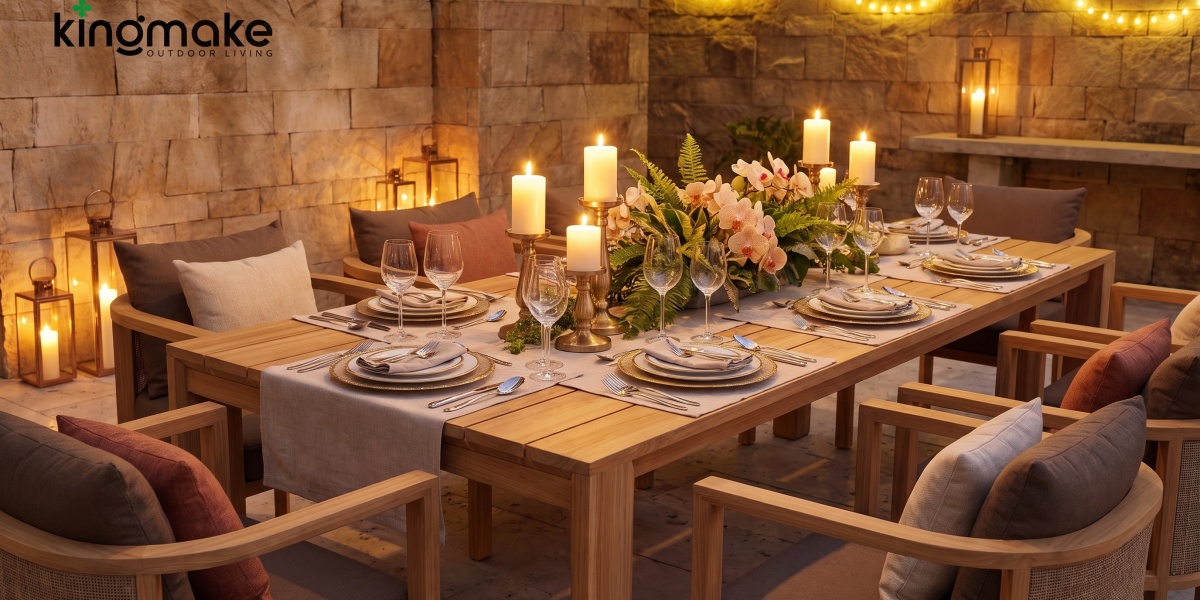
| Teak Rattan Wicker Dining Set | Poolside restaurants, garden dining | Teak top, synthetic rattan weave | Low to moderate |
| Sun Lounger & Patio Umbrella (fabric or rope-woven canopy) | Pool decks, beach clubs | Aluminum or teak frame, fabric/rope canopy | Low |
| Striped Cushion Teak Daybed/Lounger | Beachfront, rooftop lounges | Solid teak frame | Moderate — occasional oiling |
| Woven Aluminum Sofa Set | Lobby terraces, VIP lounge areas | Aluminum frame, hand-woven rope | Low |
Each of these product lines also comes in a lounge seating and coffee table version, so hotels can furnish an entire zone — dining, lounging, and casual seating — using one consistent design language instead of mixing finishes from different suppliers. This is one of the most common requests Kingmake receives from interior designers working on multi-zone resort projects: they don't just want a dining chair, they want a full collection that reads as one cohesive look across the property.
Each collection is available through Kingmake's OEM/ODM program, meaning hotel groups and distributors can adjust frame color, fabric, and rope tone to match a property's existing design language rather than settling for a standard catalog finish.
Aluminum vs. Teak: Which Material Fits Your Hotel Zone
This is one of the most common questions hotel procurement teams ask, and the honest answer is: it depends on the zone, not the whole property. Aluminum frames are lighter, resist rust when properly powder-coated, and need almost no upkeep beyond wiping down — which makes them a strong fit for high-traffic pool decks and rooftop restaurants where staff need to turn tables over quickly. Teak costs more upfront and benefits from occasional oiling if a hotel wants to keep its original color, but it brings a warmth and natural texture that aluminum can't fully replicate, which is why it's still the preferred choice for beachfront lounges and formal outdoor dining areas. Many of the resorts Kingmake works with actually use both — aluminum where volume and low maintenance matter most, and teak where the design calls for a softer, more residential feel.
What to Look for in a Reliable Hotel Furniture Partner
Before signing a supply contract, hotel procurement teams and interior designers should confirm the following:
Material certification — ask for UV and salt-spray test data, not just marketing claims
Sample lead time — a supplier that can't produce a sample in 2-3 weeks will struggle with project deadlines
Minimum order flexibility — boutique resorts often need smaller runs than large chain properties
After-sales support — spare parts availability (cushions, rope replacement) matters more than the initial purchase
Reference projects — request photos or case studies from completed hospitality installations
How Kingmake's OEM/ODM Process Works
For hotel groups sourcing furniture for the first time, the process usually follows a simple sequence. First, the hotel or designer shares reference images, a color palette, and rough quantities. Kingmake then proposes suitable collections and, if needed, adjusts frame color, rope tone, or cushion fabric to match. A physical sample is produced next, typically within 2-3 weeks, so the design team can check quality and comfort in person before committing to a full order. Once the sample is approved, bulk production begins, with timelines depending on order size — larger resort-wide orders naturally take longer than a single restaurant terrace. Finally, Kingmake handles container planning and shipping documentation so the furniture arrives in line with the property's construction or renovation schedule, rather than sitting in a warehouse or missing the opening date.
Kingmake works directly with hospitality brands, distributors, and project developers, offering full design-to-delivery support so that furniture selection doesn't become a bottleneck in a hotel's renovation or opening timeline.
FAQ
What is the best material for star hotel outdoor furniture?Aluminum and teak are the two most common choices. Aluminum suits high-traffic, low-maintenance areas like pool decks, while teak is preferred for beachfront and lounge areas where a warmer, natural look matters.
Can hotel furniture be customized to match a resort's brand colors?Yes. Through OEM/ODM, frame powder-coating, rope color, and cushion fabric can all be matched to a hotel's existing palette.
How long does a hospitality furniture order usually take?Sample approval typically takes 2-3 weeks, with bulk production and shipping timelines depending on order size and destination port.
Does Kingmake supply both indoor and outdoor hotel furniture?Kingmake focuses primarily on outdoor and semi-outdoor spaces — pool decks, terraces, beachfronts, and covered lounges — including furniture suited to humid indoor pool areas.
Conclusion
A star hotel's outdoor spaces are judged the moment a guest steps onto the pool deck, and furniture quality is a big part of that first impression. Kingmake's aluminum rope dining sets, teak loungers, and patio umbrellas are built specifically for the wear-and-tear of hospitality environments, backed by 18 years of manufacturing experience and full OEM/ODM support.
Looking for a reliable hotel outdoor furniture supplier for your next project? [Browse Kingmake's hospitality collections] or [contact our team] for samples and project quotes.
Furniture is one of the few design decisions a guest actually touches, sits on, and photographs — which is exactly why it deserves the same planning attention as flooring, lighting, or landscaping. Starting the sourcing conversation early, zone by zone, is the simplest way to avoid delays and make sure every space, from the pool deck to the beachfront, holds up to years of daily use.
 Whatsapp
 sales@cnkingmake.com
 +8613925925021