
Powder Coated Aluminum Outdoor Furniture: Pros, Cons & Rust Facts
By Kingmake Outdoor Furniture Team · First published September 5, 2025 · Updated October 14, 2026 · 9 min read
Quick answer: Powder coated aluminum is one of the best frame materials for outdoor furniture. Aluminum contains no iron, so the frame does not rust, and the baked-on powder layer adds color, UV resistance and scratch protection. It stays light, is easy to clean, and suits rain, humidity and coastal air better than powder coated steel. Its weak points are chips at edges and welds, heat in direct sun on dark colors, and quality that varies widely between factories. The coating system, not the words "powder coated", decides how long it lasts.
What Is Powder Coated Aluminum?
Powder coating is a dry finishing process. Fine polyester (or polyester-hybrid and fluoropolymer) powder is electrostatically sprayed onto a cleaned aluminum frame, then baked in an oven, commonly around 180–200 °C, so it melts and cures into a continuous film. Unlike liquid paint, there are no solvents to evaporate, and the film is thicker and harder.
The finish only works as well as the steps before it:
Pretreatment: degreasing, etching and a conversion layer (chromate-free is now common) so the powder bonds to the metal.
Powder application: an even electrostatic spray, with extra attention to welds, corners and tube ends.
Curing: the right oven temperature and time. Under-cured film stays soft and fades or peels early.
Inspection: film thickness, adhesion and color checks before packing.
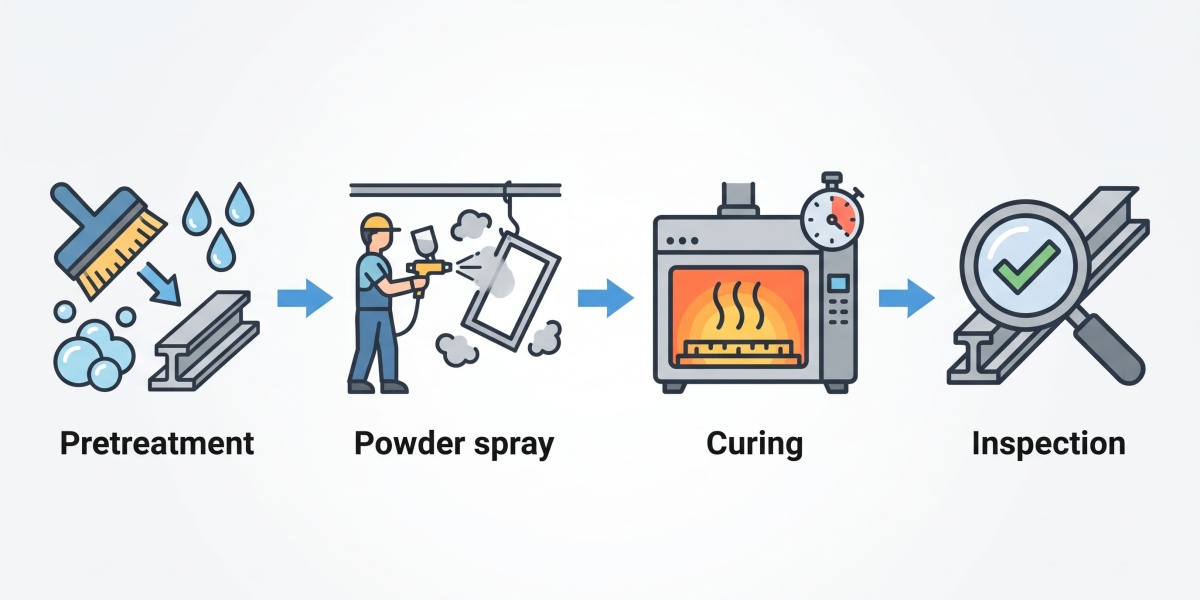
The four stages of a powder coating line for aluminum furniture frames.
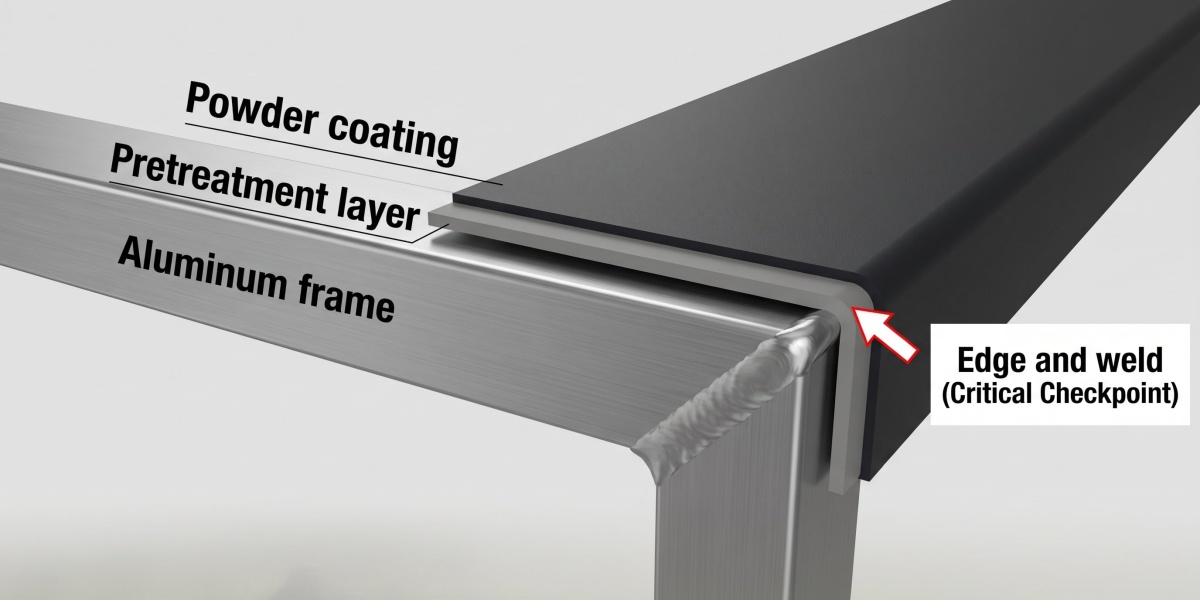
Layers on a powder coated aluminum frame: substrate, conversion layer, cured powder.
Benefits of Powder Coated Aluminum for Outdoor Furniture
1. Rust-free base metal
Aluminum has no iron, so even if the coating is scratched it will not bleed red rust. At worst, exposed aluminum forms a thin, whitish oxide that stops itself spreading. This is the single biggest reason aluminum beats steel in rain, humidity and sea air.
2. Surface protection against UV, moisture and wear
A properly cured outdoor-grade powder film shields the frame from sun, rain and everyday knocks better than most liquid paints. Specify an exterior (weather-resistant) powder; an indoor epoxy-type powder will chalk quickly outdoors.
3. Lightweight and easy to handle
Aluminum frames are far lighter than steel or solid timber of the same size. Staff can rearrange chairs, stack them and bring them in before storms without heavy lifting, which cuts daily labor and damage to floors and terraces.
4. Simple routine cleaning
The smooth, sealed surface does not soak up dirt or spills. Warm water, mild soap and a soft cloth are usually enough, and there is no oiling, sanding or sealing as with teak.
5. Wide choice of color and texture
Powder can be applied in matte, satin, gloss, fine-texture, sand and wood-grain-effect finishes. Matching a hotel or restaurant palette is straightforward, and the same RAL color can be applied across dining chairs, sun loungers and tables for a consistent look.
6. Better long-term value when specified correctly
Higher purchase price than basic painted steel is typically offset by lower repainting, replacement and handling costs. The saving only appears if the coating specification and joint quality are genuinely good, see the checklist below.
Powder Coated Aluminum Outdoor Furniture: Pros and Cons
| Pros | Cons |
|---|---|
| Does not rust, base metal has no iron | Chips at edges, welds and impact points can expose bare aluminum |
| Lightweight, easy to move and stack | Very light pieces can blow over in wind unless weighted or secured |
| Good resistance to moisture, humidity and salt air with the right pretreatment | Dark colors get hot to the touch in direct sun |
| Low maintenance: wash with mild soap and water | Low-grade powder may chalk or fade after years of strong UV |
| Hundreds of colors and finishes | Quality varies by factory: pretreatment, thickness and curing are hard to see by eye |
| Recyclable metal, low-VOC finishing process | Large chips need touch-up paint or re-coating to look new |
Does Powder Coated Aluminum Rust?
No, the aluminum itself cannot rust. "Rust" means iron oxide, and aluminum contains no iron. If the powder coat is damaged, bare aluminum can develop a thin white or grey oxide layer. It is a surface effect, not structural corrosion like red rust on steel.
Orange or brown streaks on an aluminum frame almost always come from something else:
Carbon-steel screws, bolts, hinges or springs rusting and running onto the frame. Specify stainless steel (304 or 316) or coated fasteners.
Steel components such as feet, caps or inserts hidden inside the frame.
Iron particles from nearby metal work or irrigation water.
White chalky spots (not rust) where the coating has been breached and the aluminum has oxidized. Clean and touch up.
Powder coated steel is different: a chip lets water reach the iron, and rust can creep under the film. See the comparison below. For hotels, resorts and restaurants in wet or coastal climates, this difference alone usually decides the material.
Powder Coated Aluminum vs Steel, Stainless Steel, Teak and Liquid-Painted Aluminum
| Option | Rust if coating chips? | Weight | Coastal / humid use | Upkeep | Best for |
|---|---|---|---|---|---|
| Powder coated aluminum | No red rust (white oxide only) | Light | Very good with right pretreatment and stainless fasteners | Wash with soap and water; touch up chips | Hotels, restaurants, terraces, pools, coastal sites |
| Powder coated steel | Yes, rust can start at chips and spread under film | Heavy | Weak unless galvanized or duplex-coated | Inspect often; repair chips quickly | Dry climates, budget-driven or wind-exposed seating |
| Galvanized + powder coated steel | Slower: zinc protects the edge for a while | Heavy | Good, but weld and cut-edge areas need checking | Moderate | Strength-critical frames where weight helps |
| Stainless steel (304 / 316) | Resists rust; 316 is the marine grade | Heavy | Excellent (316), 304 can tea-stain near the sea | Periodic polishing and washing | Premium seafront projects, hardware and fasteners |
| Teak | n/a (wood) | Medium to heavy | Good, but silvers and needs oiling to keep color | Oil, clean and sand periodically | Natural look, lower-traffic areas |
| Liquid-painted aluminum | No red rust | Light | Good, but paint film is thinner and scuffs sooner | Repaint more often | Low-wear decorative items |
Rule of thumb: choose aluminum when moisture, salt, pool chemicals or frequent rearranging are a concern; choose galvanized or stainless steel when weight and strength matter more than portability. A teak top on a powder coated aluminum base is a popular way to combine a warm look with a rust-free frame.
Coastal, Pool, Sun and Heat Performance
Coastal and poolside use
Salt and chlorine attack coatings and fasteners faster than rain does. For coastal and pool projects specify: chromate-free or equivalent quality pretreatment, a weather-grade (super-durable) polyester or higher powder, stainless steel 304/316 fasteners, sealed tube ends, and a fresh-water rinse every few weeks (more often in storm season). Ask the supplier for neutral salt spray test data (ISO 9227 or ASTM B117) and the coating standard it was tested to (for example Qualicoat or AAMA 2604/2605 class).
Sun, fading and chalking
Chalking is the dull, powdery surface that appears when UV breaks down a low-grade resin. To avoid it, choose an exterior-rated powder, lighter or mid-tone colors for very sunny sites, and ask for UV or weathering results rather than accepting "UV resistant" on its own.
Does powder coated aluminum get hot?
Yes. Aluminum conducts heat quickly and dark colors absorb more sun, so black or deep grey frames can be uncomfortable in direct midday sun. Mitigate with light colors, shade (see our patio umbrellas and pergolas), cushions, or armrests with wood or textilene contact surfaces.
How to Tell a Quality Powder Coat
Pretreatment: ask what process is used, in writing. Skipped or weak pretreatment is the main cause of early peeling.
Film thickness: measured with a gauge on the finished frame. Outdoor architectural-style coatings are commonly specified in the range of roughly 60–120 µm; ask for the supplier's tolerance and test records.
Adhesion: cross-cut test (ISO 2409 or ASTM D3359) results.
Cure: a solvent rub test or hardness check confirms a full cure.
Edges and welds: run a thumbnail along corners and weld seams. They should be smooth and fully coated, not thin or rough.
Corrosion and weather tests: salt spray hours and accelerated weathering data matched to the coating standard.
Fasteners and hardware: stainless or coated, never bare carbon steel.
Warranty: frame and finish terms, what is excluded, and who handles claims.
How Long Does Powder Coated Aluminum Furniture Last?
No honest answer is a single number. The frame itself can last decades, because aluminum does not rust. The finish lifespan depends on four things: coating grade, pretreatment and cure quality, climate (UV, humidity, salt), and how well it is cleaned and repaired. Heavy-use commercial sites such as hotel terraces and beach clubs wear coatings faster than a private balcony. Instead of trusting generic "10-20 year" claims, ask the supplier for the written warranty, test reports and project references in a similar climate.
Powder Coated Aluminum Furniture Cost: What Drives the Price
Frame type: extruded tube is generally cheaper than cast aluminum, which needs molds and extra finishing.
Coating grade: standard exterior polyester vs super-durable or fluoropolymer powders.
Pretreatment and process control: multi-stage lines and strict curing add cost but prevent early failure.
Hardware and fabric: 316 stainless fasteners, quick-dry foam and solution-dyed textiles raise the unit price.
Order volume, color and logistics: custom RAL colors, minimum order quantities and flat-pack vs assembled shipping all move the total.
Compare total cost over the project life (purchase, replacement, repainting, handling labor) rather than the sticker price alone.
Procurement Checklist for Hotels, Restaurants and Resorts
Confirm the base metal: extruded or cast aluminum, alloy and wall thickness.
Request the full coating specification: pretreatment, powder type and standard, film thickness, cure schedule.
Ask for a physical sample in your RAL or Pantone color, and test it outdoors for a few weeks if the schedule allows.
Get the test reports: salt spray, adhesion, weathering and, where relevant, load and stability tests.
Check hardware: stainless fasteners, nylon or rubber feet, sealed end caps.
Agree on a written warranty, covering finish and structure, with a defined claims process.
Plan inspection: pre-shipment inspection (AQL) of coating, welds and dimensions.
Order 2-3% extra touch-up paint in matching color for on-site repairs.
Check wind and stacking needs: weight, stackability and storage.
Browse commercial-grade options: outdoor dining sets, outdoor chairs, sun loungers, outdoor sofas, daybeds, bar stools and swing chairs.
Project Example: Coordinating Finishes for a French City-Center Restaurant
For a restaurant terrace in a French city center, Kingmake supplied 120 aluminum-frame KM3116 dining chairs. The key decisions were made before ordering: confirming the color against a physical sample, agreeing the coating specification, planning for stackable storage, and aligning the chair finish with the tables and umbrellas so the terrace looked consistent. Settling these early avoids mismatched batches and delays at delivery. See the full French city-center restaurant furniture project.
How to Clean and Maintain Powder Coated Aluminum Furniture
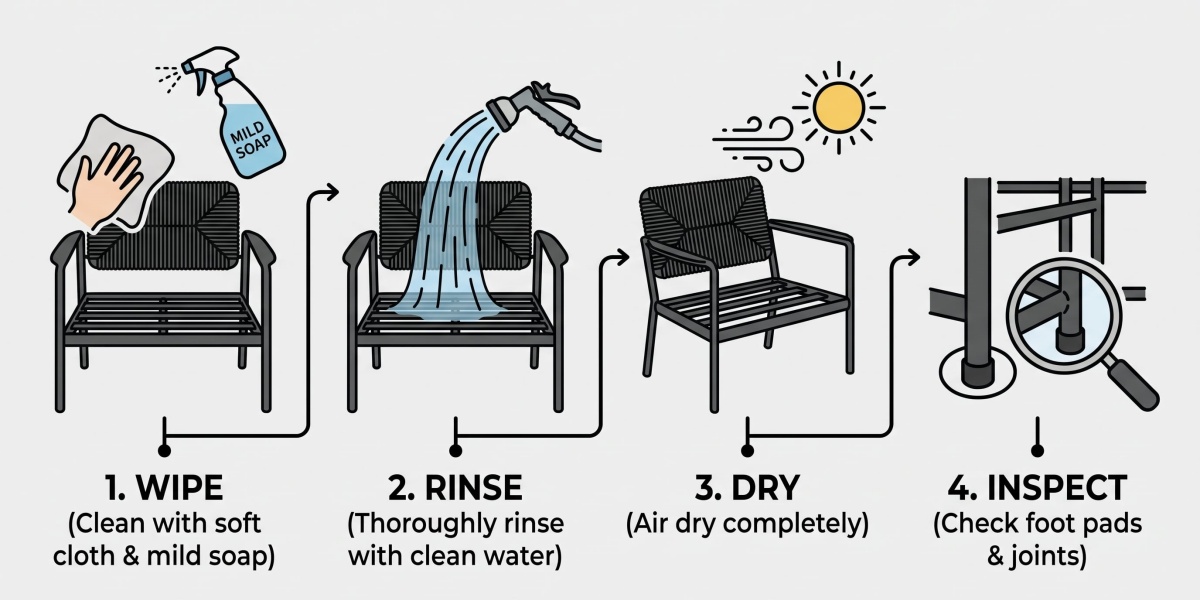
Routine cleaning (every 2-4 weeks, or after storms)
Brush or rinse off dust and grit first, so it does not scratch the surface.
Wash with warm water and a few drops of mild dish soap using a soft cloth or sponge.
Rinse thoroughly and dry with a clean cloth.
Coastal and pool sites
Rinse with fresh water every couple of weeks to remove salt and chlorine residue, and check fasteners at each season change.
What to avoid
Steel wool, abrasive pads, solvents, paint thinners, strong acids or alkalis, and high-pressure jets held close to the surface.
Restoring shine and repairing chips
Dull or chalky finish: clean, then apply a light coat of non-abrasive car wax.
Small chip: clean and dry, lightly key the edges, apply matching touch-up paint in two thin coats.
Large damage or heavy oxidation: strip and re-powder-coat with a professional applicator. Old furniture can usually be re-coated.
Frequently Asked Questions
Does powder coated aluminum rust?
No. Aluminum has no iron, so it cannot form red rust. A damaged coating may allow a thin white oxide to form. Orange stains usually come from steel screws or parts.
Is powder coated aluminum good for outdoor furniture?
Yes. It is light, rust-free, easy to clean and available in many colors. Quality depends on pretreatment, coating grade, thickness, curing and weld finishing.
How long does powder coated aluminum last outdoors?
The frame can last for decades; the finish depends on coating grade, climate and care. Ask for a written warranty and test reports.
Is powder coated aluminum or powder coated steel better?
Aluminum for wet, humid or coastal sites; steel (preferably galvanized) when you need weight and strength and the climate is dry.
Can powder coated aluminum be used near the sea or a pool?
Yes, with a weather-grade powder, quality pretreatment, stainless 316 or 304 fasteners and regular fresh-water rinsing.
Does powder coated aluminum fade or chalk in the sun?
Low-grade powder can chalk and fade, especially in dark colors. Choose exterior-rated powder and ask for UV or weathering data.
Does powder coated aluminum get hot in the sun?
Yes, especially dark colors. Use lighter shades, shade structures or cushions.
How do you clean powder coated aluminum outdoor furniture?
Warm water, mild soap and a soft cloth, then rinse and dry. Avoid abrasives and solvents.
How do I repair a chip in powder coated aluminum furniture?
Clean, dry, key the edge and apply matching touch-up paint in thin coats; re-coat large areas professionally.
What is the difference between cast and extruded powder coated aluminum furniture?
Cast aluminum is molded into solid, ornate frames; extruded aluminum is lighter and suits modern slim profiles. Both are powder coated the same way.
Discuss Your Furniture and Finish Requirements with Kingmake
Tell us your climate, project type and quantity, and we will recommend the frame, coating specification and color samples, with test reports and warranty terms in writing. Request a quote or samples, or explore our aluminum outdoor furniture collection.
 Whatsapp
 sales@cnkingmake.com
 +8613925925021